The Venetian envoy Pietro Zen, in a report sent to his government in 1532, provides a detailed description of the famous Lion and Bull sculpture at Constantinople. Zen’s report is particularly important because it offers a first-hand observation of the monument after an earthquake, which had slightly displaced the figures. Many historians, including Von Hammer, quoted parts of Zen’s account but omitted crucial details that clearly identify the sculpture and its location.
The Original Text
The original Italian text, as Zen wrote it, describes the monument as follows: “At the gate where animals are slaughtered, near the columns of the Hippodrome, on the road below, called in Turkish Chiachadi Capisso, which in the Frank language means ‘Gate of the Crack,’ outside the water-gate and beneath three very ancient windows, with a lion on either side, down at the shore, on two columns, is a marble slab on which stands a large bull, much larger than life, attacked by a lion. The lion is mounted on the bull’s back, has thrown it down, and strikes at one of the bull’s horns with great force. The lion is larger than life and carved from a single piece of fine stone. These animals used to face Anatolia, but that night they appeared to turn their heads toward the city. The next morning, all the people ran to the place in astonishment, discussing the event, while a comet appeared in the sky for many nights Customized Istanbul Tours.”
This text is extremely precise and leaves no doubt that Zen observed the same Lion and Bull group previously mentioned by Anna Comnena and Zonaras.
Identification of the Monument
Zen’s description confirms both the subject and the location of the sculpture. The monument is unquestionably the marble group of the Lion attacking the Bull, which was one of the main ornaments of the Harbour of the Bucoleon. The details about the size of the animals, the single piece of marble, and the positioning on columns match earlier Byzantine accounts. Zen also emphasizes the extraordinary size of the figures, noting that the lion was “larger than life” and that the entire sculpture could not be moved by a thousand men.
Location Made Clear
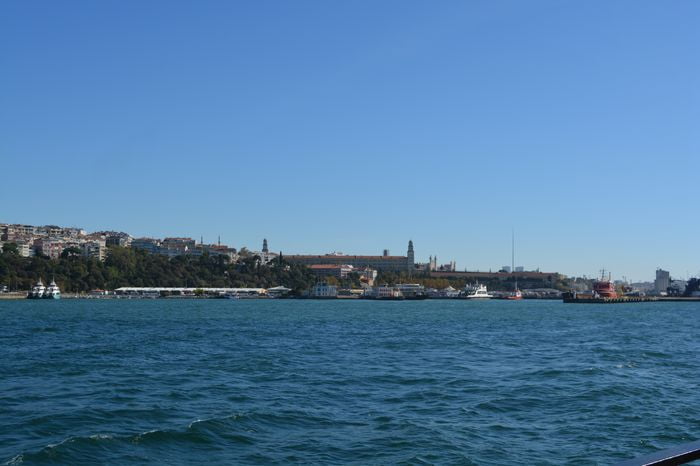
The location is described with remarkable clarity. Zen states that the sculpture stood “on the quay outside the water-gate named Tchatlady Ivapou,” which was situated below the Hippodrome. He even specifies the nearby landmarks: the columns of the Hippodrome and three ancient windows. The description leaves no ambiguity, as he repeats and emphasizes key details to ensure readers could identify the precise site.
Public Reaction
Zen also reports the astonishment of the local population when they observed the earthquake had caused the heads of the lion and bull to turn toward the city. People gathered in crowds to witness the phenomenon and discussed its significance, while a comet appeared in the sky for several nights, adding a sense of wonder and superstition.
Historical Significance
This account is vital for historians and archaeologists. It confirms both the identity of the Lion and Bull sculpture and its exact position at the Bucoleon Harbour. Combined with earlier Byzantine records, Zen’s detailed observation allows us to reconstruct the grandeur and layout of the harbour with confidence The Marble Group of the Lion and the Bull.