The Venetian historian Sagrado, in his Memorie Istoriche de Monarchi Ottomani (1677), provides a detailed account of the famous Lion and Bull sculpture in Constantinople. According to him, the monument fell to the ground during an earthquake. He writes in Italian:
“In Constantinople, a stone lion, which stood outside the water-gate, held a bull with one fang. It originally faced east, but after the earthquake it turned to face west. Since it was perched on two columns, it fell along with the bull. One of the legs broke, and the head of the bull fell into the water, as if it were drinking Pietro Zen’s Detailed Description.”
This description clearly shows the dramatic effect of the earthquake on the sculpture and emphasizes its original placement above the shore, on tall columns. The lion and bull were arranged in a striking pose: the lion attacking the bull, a symbol of strength and power.
Comparison with Modern Observations
Interestingly, similar events in more recent history remind us how people have always interpreted the movement of monuments as meaningful. The Spectator, in its April 20, 1895 edition, reports the effects of earthquakes in Southern Austria, Northern Italy, and Hungary. It describes a statue of Emperor Charles in Trieste that had twisted on its pedestal and now faced the opposite direction. The article notes: “What an omen that would have been considered three hundred years ago!” This demonstrates that unusual movements of statues often attracted attention and were interpreted as signs, just as the Lion and Bull’s fall would have been centuries earlier.
Location of the Monument
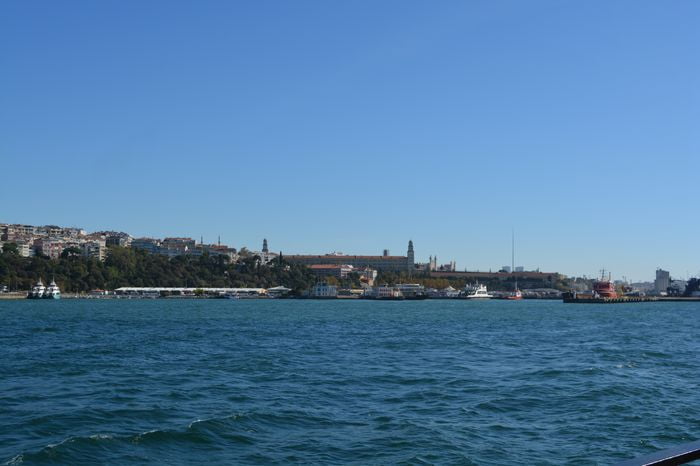
Sagrado, like Zen before him, gives clear clues about the monument’s location. The Lion and Bull stood near a slaughter-house, beneath a row of three windows of a very ancient building. The building was decorated with lions at either end of the row, emphasizing its grandeur. The water-gate near which the sculpture stood is known as Tchatlady, a landmark recognized by the citizens of Constantinople Customized Private Turkey Tours.
Zen had previously described the same gate, noting that it was near the Hippodrome, on level ground below the racecourse. All details he provided—proximity to the Hippodrome, the windows, and the shore—match Sagrado’s later account, confirming both the monument’s site and orientation. The repeated observations from different centuries help historians locate the Bucoleon Harbour’s lion-and-bull sculpture with certainty.
Historical Importance
The Lion and Bull monument was more than decorative; it symbolized the imperial power and grandeur of Constantinople. Its placement near the Great Palace and along the Bucoleon Harbour made it a prominent sight for visitors and residents alike. Earthquakes and the natural decay of time have damaged the sculpture, but historical accounts from Zen, Sagrado, and others preserve its memory, offering insight into Byzantine art, architecture, and symbolism.